From Government Monopoly to Commercial Revolution
Space exploration has changed dramatically over the past decade. What was once the exclusive domain of government agencies has become a thriving commercial ecosystem that’s completely redefining how we think about space. This isn’t just about different funding sources or new business models. We’re witnessing the birth of an entirely new economic frontier that could reshape global commerce, scientific discovery, and technological innovation in ways we’re only starting to understand.

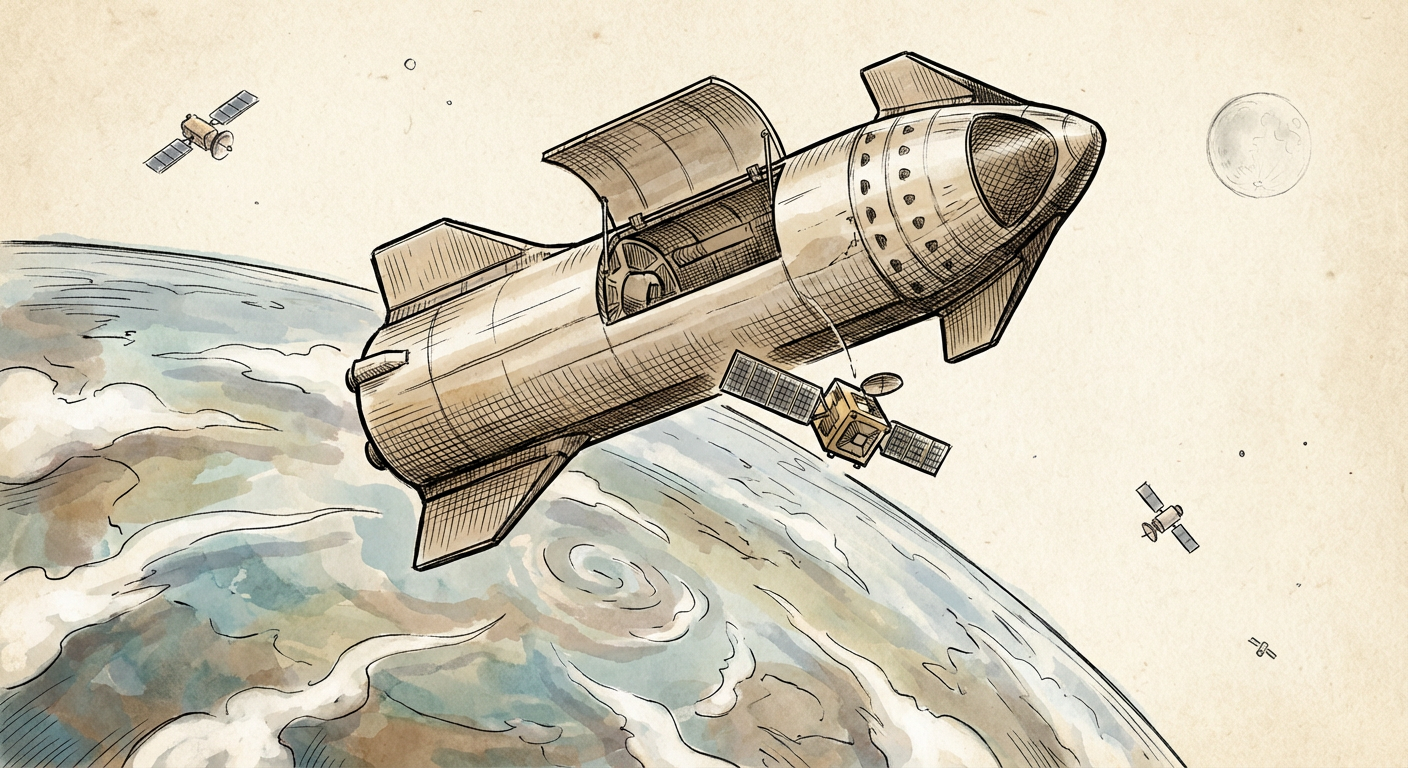
The drivers behind this revolution show up in our daily headlines. SpaceX’s Starship has successfully completed orbital test flights and started accepting commercial payload bookings. Fully reusable heavy-lift capabilities are no longer science fiction but operational reality. Meanwhile, NASA news regularly updates us on the Artemis program, which aims to return astronauts to the lunar surface between 2026 and 2027. That’s humanity’s first crewed lunar mission in over half a century.
These developments aren’t isolated achievements. They’re interconnected pieces of a broader transformation that’s fundamentally changing the economics of space access. The cost of launching materials into orbit has dropped from tens of thousands of dollars per kilogram to hundreds. This dramatic reduction has created a cascade effect, enabling new business models, scientific missions, and technological innovations that point toward a future where space-based economic activity becomes routine rather than extraordinary.
Building the Infrastructure for a Space-Based Economy
The commercial space sector is rapidly building the basic infrastructure needed to support sustained economic activity beyond Earth’s atmosphere. NASA has awarded contracts to both Axiom Space and Blue Origin for commercial space stations, recognizing that the future of low Earth orbit research and manufacturing will likely depend on privately operated facilities rather than government-owned platforms. These commercial stations are more than just research outposts. They’re the first steps toward establishing permanent industrial and scientific installations that could work as launching pads for deeper space exploration and economic development.
The implications of this infrastructure development go far beyond the immediate technical achievements. Commercial space stations will provide platforms for manufacturing processes that are impossible to replicate on Earth, taking advantage of microgravity conditions to produce materials with unique properties. These facilities will also work as testing grounds for life support systems, closed-loop resource recycling, and other technologies essential for long-duration space missions and eventual planetary settlements.
At the same time, the regulatory framework governing space-based economic activity is evolving to accommodate these new realities. International bodies, including the United Nations, are actively developing comprehensive regulatory frameworks for asteroid mining operations. They recognize that extracting resources from celestial bodies represents both enormous economic opportunity and significant legal complexity. These regulations will establish the legal foundations for what could become one of the most valuable industries in human history, potentially providing access to rare earth elements, precious metals, and other materials in quantities that dwarf terrestrial reserves.
Managing the Challenges of Rapid Expansion
As commercial space activity accelerates, the industry faces increasingly complex challenges that require immediate attention and sophisticated solutions. Space debris has emerged as one of the most pressing concerns. New satellite operators now face mandatory debris mitigation requirements that reflect the growing recognition that orbital space is a finite and valuable resource that must be carefully managed. The implementation of these regulations is a step toward ensuring that rapid commercial expansion doesn’t compromise the long-term sustainability of space-based operations.
The debris mitigation challenge illustrates a broader principle that will become increasingly important as space commerce expands: the need to balance rapid innovation and economic development with responsible stewardship of the space environment. Space News industry reports regularly highlight the tension between the desire to deploy large satellite constellations quickly and the need to ensure that these deployments don’t create long-term problems for future space users.
These challenges extend beyond technical considerations to encompass complex questions of international cooperation, resource allocation, and risk management. As more nations and companies develop space capabilities, the need for coordinated approaches to space traffic management, spectrum allocation, and planetary protection becomes increasingly urgent. The decisions made today regarding these issues will determine whether space development proceeds in a sustainable, coordinated manner or devolves into a chaotic scramble that ultimately undermines the long-term potential of space-based economic activity.
The Economic Promise of the Lunar Frontier
Economic projections for space-based commerce paint a picture of transformation that extends far beyond current terrestrial economic models. Analysts forecast that the lunar economy alone could reach valuations of $170 billion by 2040, driven by a combination of scientific research, resource extraction, manufacturing, and tourism activities. This projection reflects careful analysis of developing technologies, demonstrated capabilities, and emerging market demands that collectively point toward a future where lunar operations become economically viable and strategically important.
The lunar economy is more than just another market opportunity. It’s a fundamental expansion of human economic activity into a new domain with unique characteristics and unlimited potential for growth. Unlike terrestrial markets, which are constrained by finite resources and established competitors, the lunar economy begins with abundant raw materials, minimal regulatory overhead, and enormous opportunities for first-mover advantages. The gravitational characteristics of the Moon also make it an ideal staging area for deeper space missions, potentially positioning lunar operations as the gateway to asteroid mining and eventual Mars colonization efforts.
The development of lunar economic activity will likely drive innovations in robotics, artificial intelligence, closed-loop life support systems, and advanced manufacturing technologies that will find applications far beyond space exploration. These spillover effects could drive technological advancement across multiple terrestrial industries, creating a positive feedback loop where space-based economic development accelerates innovation in ways that benefit both space and Earth-based activities.
Preparing for an Unprecedented Transformation
The convergence of technological capability, regulatory development, and economic opportunity in the space sector represents one of the most significant transformations in human economic activity since the Industrial Revolution. The decisions made today regarding space infrastructure, regulatory frameworks, and international cooperation will determine whether humanity successfully establishes a sustainable, prosperous presence beyond Earth or wastes this unprecedented opportunity through short-sighted competition and inadequate planning.
The stakes involved in this transformation extend far beyond immediate commercial returns or national prestige. The development of space-based economic activity could provide solutions to resource scarcity, enable scientific discoveries that revolutionize our understanding of the universe, and establish the foundations for human expansion throughout the solar system. However, realizing these possibilities requires sustained commitment, international cooperation, and careful attention to the long-term consequences of near-term decisions.
Understanding these developments and their implications is essential for anyone seeking to comprehend the forces that will shape the next century of human development. The commercial space revolution isn’t a distant possibility but a present reality that demands our attention, engagement, and thoughtful participation in determining how this transformation unfolds.